AI-Powered Automatic Passenger Counting

Redefining the APC paradigm

Built for real transit. Designed to reveal more. Infodev’s AI‑APC combines passenger counts with outstanding accuracy and onboard load data with configurable AI capabilities, giving transit teams a sharper view of demand, capacity and vehicle use.

30+ years

APC Expertise

Privacy

No Facial recognition

Since 2016

AI-APC Development

In Operation

Across multiple projects

99.8%

Accuracy

Setting the new standard for precision and reliability

outstanding counting accuracy

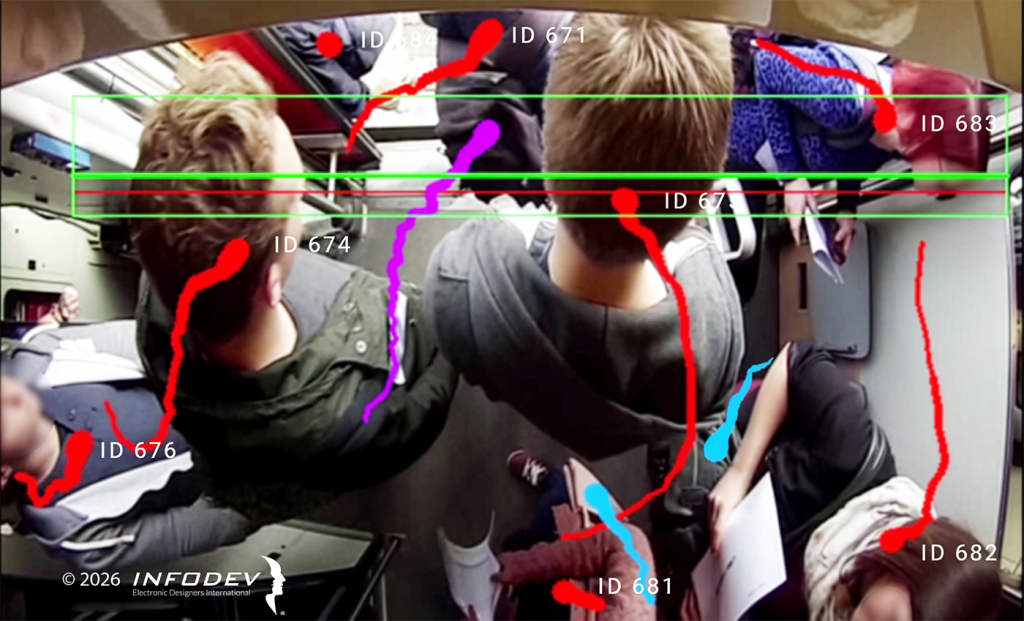
Our AI‑APC achieved 99.8% counting accuracy across more than 1,000 passengers in complex transit environments.

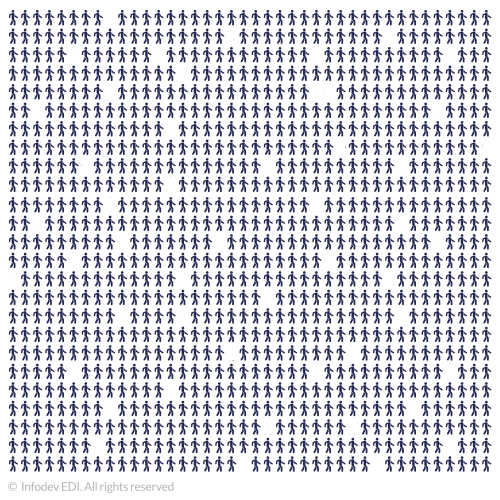
What 95% Accuracy Looks like

95% accuracy illustration

What 99.8% Accuracy Looks like

99,8% accuracy in revenue service over a thousand passengers

Recent installs achieved an accuracy of 99.8% in revenue service.

You deserve 25x better

From passenger counts to

Richer operational context

Infodev’s advanced technology is changing the game for transit agencies, offering a holistic view of ridership data that goes beyond basic passenger counts. With access to qualitative metrics and insights into anonymous passenger behavior, agencies can optimize their services and improve the overall travel experience. This innovative system is the future of transit data.

Highly Accurate Counting

Reliable boarding, alighting, and load data at the core of the system.

Passenger Context

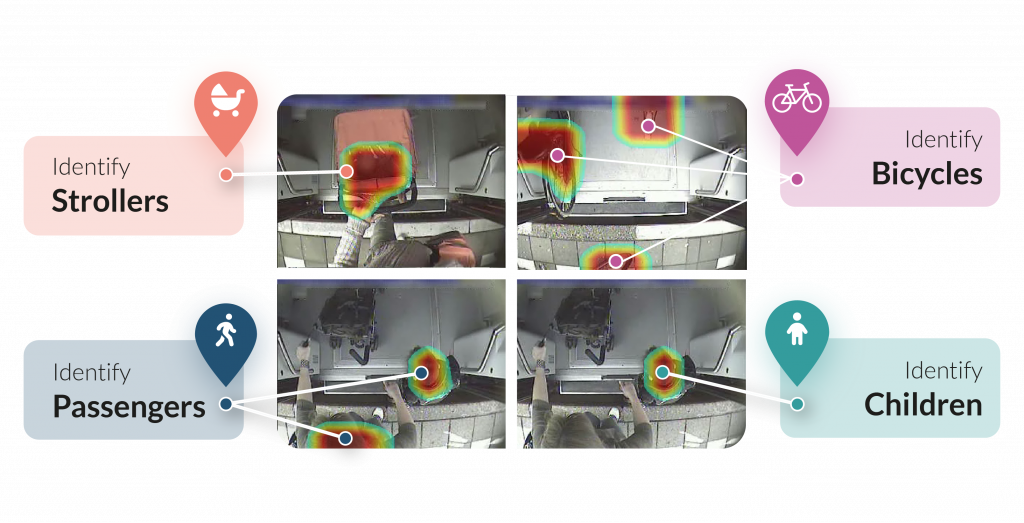
Add classification of passengers, mobility devices and relevant objects.

Occupancy Insight

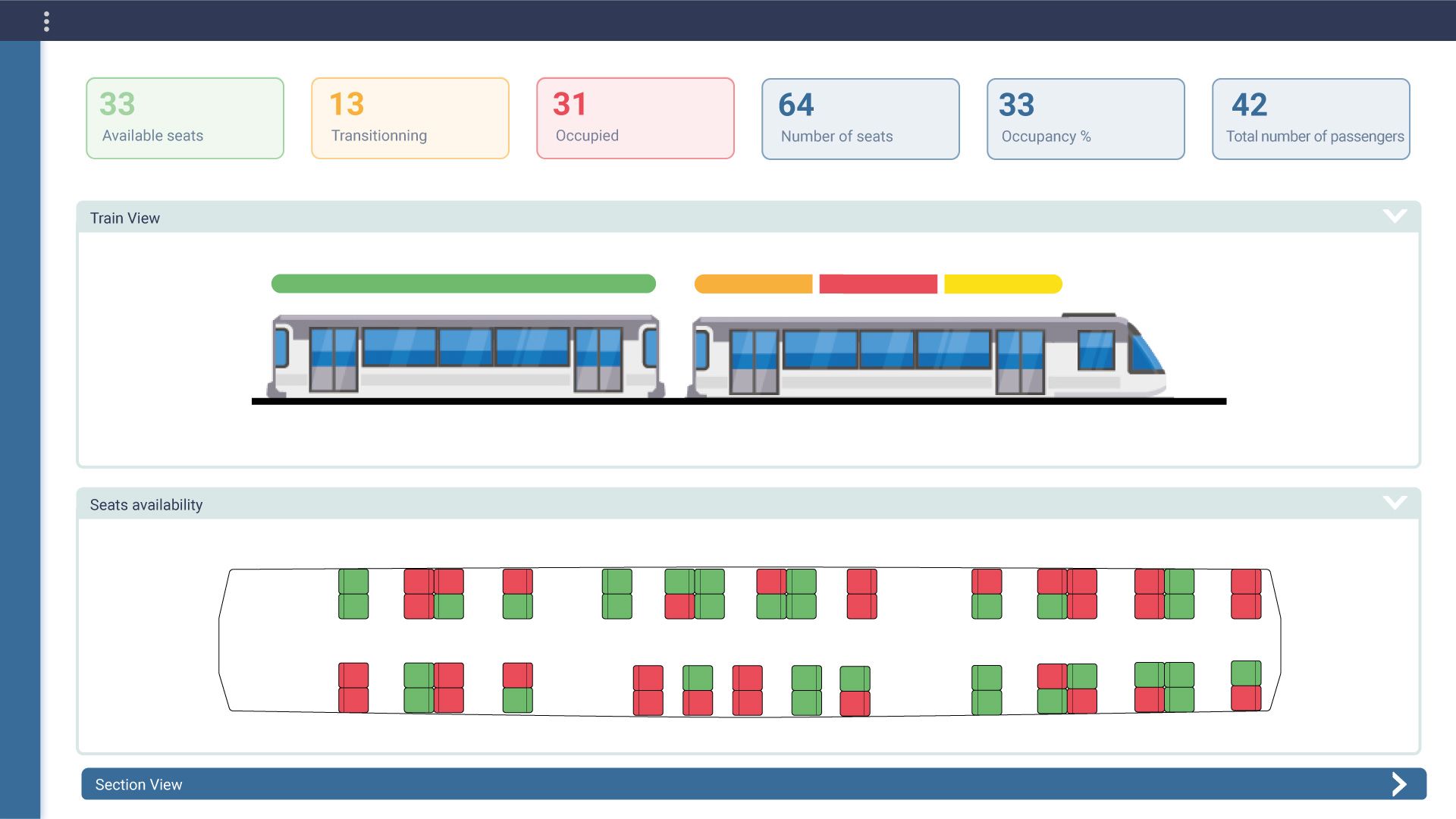
Monitor seat, space and vehicle occupancy, with data that can also support passenger information in real time.

Operational Value

Provide richer data for planning, operations and passenger experience.

Capabilities

Tailored to your passenger data needs

AI-based automatic passenger counting is just the beginning. Add capabilities that align with your operational objectives and evolve as your needs change.

Since its introduction in 2019, Infodev’s AI-APC has continued to evolve alongside the transit agencies that use it. Through our collaborative innovation approach, customer needs become new capabilities, from fare-evasion detection to individual seat occupancy, keeping the system aligned with the industry’s changing operational priorities.

CORE AI-APC

Passenger Counting

Boarding and alighting counts remain the foundation of the system.​

OPTIONAL AI

Adult & Children Classification

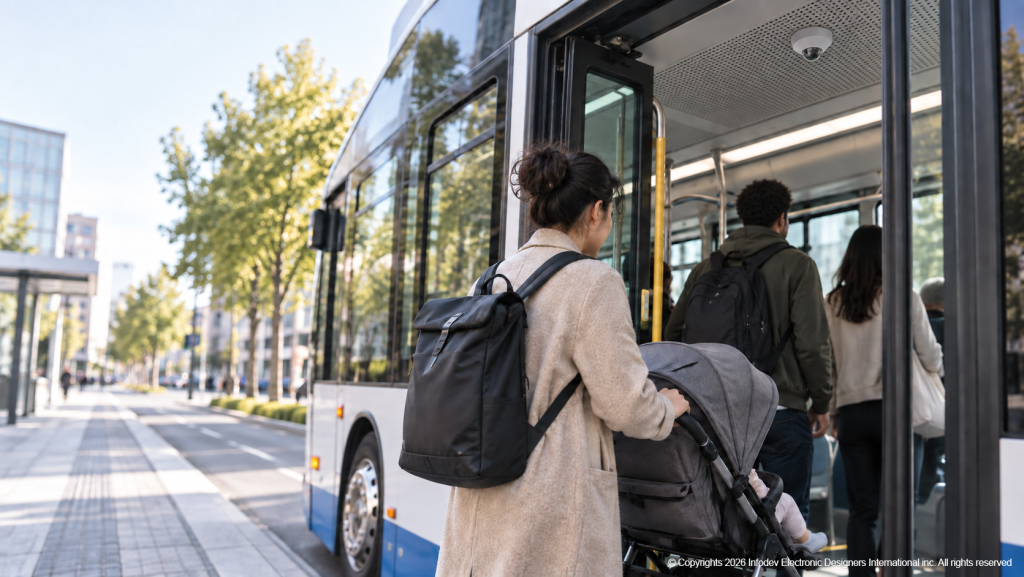
More than height detection: Infodev AI-APC uses visual context to detect children accurately across real-world situations including when carried or seated in a stroller.

OPTIONAL AI

Object Counting and Detection

Mobility devices such as bicycles, wheelchairs, strollers, luggage and other configured categories.

OPTIONAL AI

Seat & Space Occupancy

Understand how seats, designated spaces and vehicle areas are being used.

OPTIONAL AI

Other

Many of our capabilities were developed in response to specific client needs, including:

Maturity & Proof

A decade of ai development built on apc expertise

2016

Development begins

Based on its years of experience in APC for transit, Infodev starts developing AI-based passenger counting technologies.

2019

First demos

Since 2019, Infodev has demonstrated its AI‑APC capabilities at industry events across North America and Europe, including the Innovation Hub, APTA conferences, UITP and the InnoTrans AI Mobility Lab.

2024

Operational

Since 2024, Infodev AI-APC has moved beyond R&D into successful real-world deployments, delivering accurate and reliable performance across multiple transit fleets without site-specific AI retraining.

99.8%

Counting Accuracy

Our AI‑APC has repeatedly achieved 99.8% counting accuracy in complex transit environments.

typical ai-apc architecture

from onboard ai
to actionable transit data

By managing every stage of the processing chain, from the sensor to the final report, Infodev can take full responsibility for data quality and support the system throughout its operational life.

Detect

DA-1000

The DA-1000 camera is installed at or near each door to capture passengers boarding and alighting, with the video stream processed by the GW-1000 AI computing device.

Where suitable cameras are already installed, existing video feeds may also be reused following a technical assessment, integration, and validation process.

Process

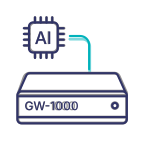
GW-1000

The onboard AI then classifies each detection, distinguishing passengers from configured categories such as children, luggage, bicycles, wheelchairs and strollers.

All video processing is performed in real time by the onboard edge computer. No video is transmitted outside the vehicle, and no images or video recordings are retained unless specifically requested by the client.

The GW‑1000 supplies power and communications to each sensor through PoE (Power over Ethernet) and converts the video feeds into passenger & object counts.

Integration with onboard systems

Connect & Enrich

External systems

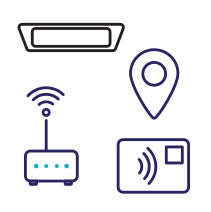
The GW then sends the relevant information to external systems (cell modem, CAD/AVL, server, …) through an interface, typically Ethernet.

APC results, including timestamps, GPS positions, boarding and alighting counts, and door events, can be enriched with operational data from the CAD/AVL system, such as operator, route, block and trip identifiers. The combined data is then logged by the GW‑1000.

Post Process

Storage

The GW-1000 performs passenger and object detection and counting onboard, then sends the resulting data to an external server for storage, enrichment, and integration with operational information.

Report

API, SFTP, Reports

The server assembles data from the fleet, matches it independently with scheduled blocks and trips (HASTUS, Trapeze, etc.), performs automated quality checks to remove unwanted information and exports the resulting information through SFTP, APIs or reports.

Data Safety and Passenger Anonymity is our Priority

Data privacy plays a major role in our development process. With a privacy by-design approach, our AI-APC system supports compliance with applicable privacy requirements, including GDPR, California CCPA and the US Blueprint for an AI Bill of Rights. It does not use facial recognition, and no video recordings are retained during standard operation.

Operational compatibility

designed for your existing transit ecosystem

Infodev’s systems can be installed as a standalone setup or integrated with other systems. 

Related resources

go deeper

01

Transit Grade Camera

02

Edge AI Processing Unit

03

200 | 400 | 1000

Need more information?

INFODEV EDI’s professionals can help you design and develop your new project during the very first steps of the process. Our dedicated and knowledgeable staff will gladly assist you with the design and implementation of your project and provide you with flawless results.

One of our staff members will contact you shortly.